

Complete turnkey dust collecting systems — cyclone pre-separator, pulse-jet bag filter, centrifugal extraction fan, and controls — for industrial dust emission control. CPCB compliant design, IS 6394, IS 4894. Manufacturer from Mumbai, India.
Dust Collecting System — Manufacturer & Supplier, India
Vayuvents designs and manufactures complete Dust Collecting Systems — cyclone pre-separator, pulse-jet bag filter, extraction fan, and controls. CPCB compliant. Mumbai.
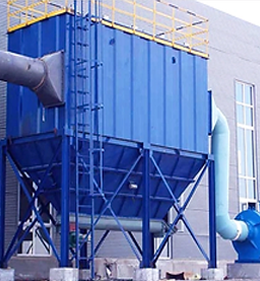
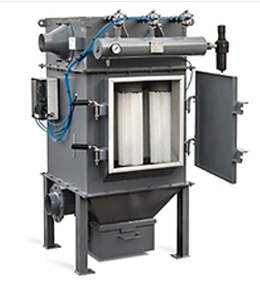
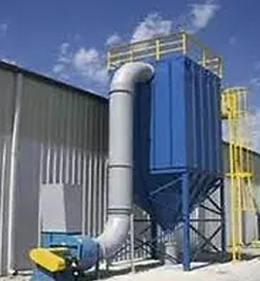
A complete Dust Collecting System from Vayuvents integrates all the components required for industrial dust emission control into a coordinated, engineered system: (1) a cyclone pre-separator for coarse dust removal; (2) a pulse-jet bag filter for fine dust separation to CPCB outlet concentration; (3) a centrifugal extraction fan to provide the required airflow and system pressure; and (4) a control panel with interlocked sequence control.
The cyclone pre-separator removes 70 to 90% of the inlet dust mass as coarse fraction — dramatically reducing the load on the downstream bag filter and extending bag life. The pulse-jet bag filter then removes the remaining fine dust to outlet concentrations of 10 to 50 mg/m³ — meeting CPCB emission standards for the industry.
Vayuvents provides full system engineering for dust collecting systems: duct design with pressure drop calculation, equipment selection (cyclone size, bag filter area, fan power), civil foundation specification, and controls design. We supply all components from our own manufacture — cyclone, bag filter, fan, rotary valves, and control panel.
Turnkey supply available including structural fabrication, civil works coordination, equipment supply, erection supervision, and commissioning for projects across India.
Key Features & Benefits
Continuous Online Cleaning
Pulse-jet compressed air cleaning occurs while the fan runs — no shutdown required for filter cleaning, ensuring 24/7 continuous dust collection without production interruption.
High Filtration Efficiency
>99% efficiency for particles above 1 micron — meets CPCB outlet concentration norms of 10 to 50 mg/m³ for all industrial dust types.
Wide Filter Media Range
Polyester felt, PTFE membrane, antistatic, water-repellent, and high-temperature glass fibre bags — matched to the dust type, chemical composition, and temperature.
High-Temperature Service
Glass fibre bags rated to 260°C — suitable for cement kiln exit gas, metal furnace fume, and chemical process high-temperature dust streams.
Modular Construction
Modular bag house design — additional filter modules can be added as production expands without replacing the complete unit.
Integrated Dust Discharge
Rotary airlock valve with hopper — continuous dust discharge without interrupting the filtration airflow, maintaining efficient dust collection at all times.
Low Maintenance
Pulse-jet cleaned bags have significantly longer life than mechanically shaken bags — reduced bag replacement frequency and lower maintenance cost.
CPCB Compliant
System designed and sized to meet applicable CPCB emission standards at the stack outlet with certified filtration performance.
Technical Specifications
| Parameter | Specification |
|---|---|
| System Airflow | 500 to 2,00,000 m³/hr |
| Primary Separation | Cyclone dust collector — 70 to 90% mass efficiency |
| Final Filtration | Pulse-jet bag filter — >99% for particles above 1 micron |
| Extraction Fan | Centrifugal blower — matched to system pressure drop |
| Outlet Concentration | 10 to 50 mg/m³ (per CPCB norms) |
| Dust Discharge | Rotary airlock valves at cyclone and bag filter hoppers |
| Control | Interlocked sequence control panel with differential pressure monitor |
| Standards | IS 6394 | IS 4894 | CPCB emission norms |
Product Images

Where It Is Used
HEAVY INDUSTRY & CEMENT
- Cement Plants: Raw mill, cement mill, and packing plant dust collection.
- Metal Grinding & Shot Blasting: Fine metal dust final collection after cyclone.
- Foundry & Smelter: Metal fume and fine dust final collection.
- Power Plants: Fly ash and coal dust collection after ESP or cyclone.
- Stone Crushing: Limestone, granite, and aggregate fine dust collection.
- Fertiliser Plants: Urea, DAP, and potash dust collection at transfer points.
PROCESS & SPECIALTY MANUFACTURING
- Pharmaceutical Manufacturing: API dust, excipient dust, and tablet press dust.
- Food Processing: Flour, spice, sugar, and grain dust collection.
- Chemical Plants: Pigment, dye, and fine chemical powder collection.
- Plastic & Rubber: Carbon black, PVC powder, and polymer dust collection.
- Textile Mills: Lint, fibre, and fly collection from ring frame and weaving machines.
- Woodworking: Sawdust, wood flour, and MDF dust final collection after cyclone.
You May Also Need
FAQs — Dust Collecting System
Both are fabric filter dust collectors that use cloth bags to separate dust from the airstream. The difference is the cleaning mechanism. A pulse-jet dust collector cleans bags using brief pulses of compressed air directed into each bag row — dislodging accumulated dust cake while the fan continues running (online cleaning). A bag house dust collector is a general term for any large fabric filter installation — which may use pulse-jet, reverse-air, or mechanical shaking cleaning. Large industrial installations are typically called bag houses regardless of the cleaning method.
A well-designed pulse-jet dust collector with polyester felt bags achieves greater than 99% mass filtration efficiency for particles above 5 microns. With PTFE membrane bags, efficiency exceeds 99.9% for particles above 1 micron, achieving outlet concentrations below 10 mg/m³. This meets the most stringent CPCB emission norms. The PTFE membrane prevents dust from penetrating the bag fabric — maintaining consistent high efficiency throughout the bag life.
Pulse-jet cleaning requires clean, dry compressed air at 5 to 7 bar pressure. A dedicated compressed air receiver (typically 200 to 500 litres) is installed adjacent to the dust collector to provide the instantaneous compressed air volume needed for each cleaning pulse. The air consumption is 2 to 5 Nm³/hr depending on bag count and cleaning frequency. Vayuvents sizes the compressed air requirement and receiver with each pulse-jet system.
For cement plant raw meal, cement, and fly ash dust: standard polyester felt bags are adequate for temperatures below 120°C. For cement kiln exit gas at 150 to 200°C: woven glass fibre bags with PTFE membrane are required. For dusty airstreams with moisture condensation risk: water-repellent treated polyester bags or PTFE membrane bags prevent bag blinding from moisture. Vayuvents selects the correct bag material based on your dust type, temperature, and moisture content.
In typical cement, mineral, and woodworking dust service, polyester felt bags last 2 to 4 years. PTFE membrane bags last 4 to 7 years. Bag life depends heavily on: dust abrasiveness (abrasive silica dust wears bags faster), chemical attack (acid gases damage standard polyester), temperature (exceeding bag rated temperature shortens life rapidly), and cleaning frequency (over-cleaning stresses bags). Vayuvents provides bag life estimates and replacement bag supply for all models.
Sticky or hygroscopic dust (some metal oxides, ammonium sulphate, food powders) can cause bags to blind — the dust cake does not release properly during cleaning pulses. Solutions include: (1) PTFE membrane bags that prevent dust penetration; (2) heated bag house to keep dust above its dew point and prevent moisture condensation; (3) water-repellent bag treatment; (4) more frequent cleaning pulses. Vayuvents assesses the dust characteristics and recommends the appropriate bag type and cleaning strategy.
Contact Vayuvents at enquiry@vayuvents.com or call +91 90961 88703. Share the dust type, airflow in m³/hr, inlet dust loading in g/m³, gas temperature, moisture content, and required outlet concentration. We will size the correct system and provide a technical and commercial proposal within 24 hours.