
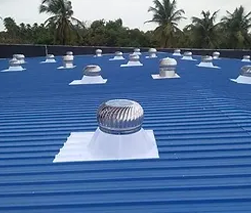
Fixed-cowl wind ventilators for low-cost, zero-power natural rooftop ventilation in warehouses, sheds, and agricultural buildings. No moving vanes or motor — relies on wind-pressure differential across the roof opening. Aluminium and GI construction. Manufacturer from Mumbai, India.
Wind Ventilator — Manufacturer & Supplier, India
Vayuvents supplies Wind Ventilators — fixed-cowl, zero-power rooftop ventilation units for warehouses, sheds, and agricultural buildings. GI and aluminium construction. Manufacturer & supplier in Mumbai.
A Wind Ventilator is a static rooftop ventilation unit with a fixed aerodynamic cowl and no rotating vanes or motor. It works purely on the pressure difference created as wind passes over the roof opening — drawing hot, stale air out of the building through natural suction, with the cowl shape preventing rain and debris ingress.
Because it has no moving parts, a wind ventilator is simpler and more durable than a turbo ventilator (which uses rotating vanes) — there is nothing to lubricate, wear, or fail mechanically. The trade-off is that airflow performance depends entirely on ambient wind conditions and there is no rotating element to maintain momentum in gusty or variable wind.
Vayuvents manufactures wind ventilators in GI and aluminium construction, sized to match standard roof opening diameters used across warehouse, shed, and agricultural building construction. The fixed cowl design is particularly suited to locations with strong, consistent prevailing wind where a static ventilator performs reliably without any moving parts to maintain.
For buildings needing guaranteed ventilation regardless of wind conditions, Vayuvents recommends the motorised roof ventilator or turbo ventilator range instead — contact us for a free comparison and sizing assessment for your specific building.
Key Features & Benefits
No Moving Parts
Fixed cowl design with no rotating vanes, bearings, or motor — nothing to lubricate, wear, or mechanically fail over the service life of the unit.
Static Pressure-Driven Extraction
Uses the natural pressure differential created by wind passing over the roof opening to draw hot, stale air out of the building continuously.
Weatherproof Cowl Shape
Aerodynamic fixed cowl profile prevents rain ingress and blocks direct wind-driven debris entry while allowing continuous air extraction.
Zero Operating Cost
No electricity and no maintenance of moving parts — the lowest lifetime cost ventilation option for buildings with consistent ambient wind.
Corrosion-Resistant Construction
GI and aluminium construction options resist corrosion in standard industrial, agricultural, and coastal-adjacent installations.
Simple Installation
Bolts directly onto a standard roof curb or opening — no electrical connection or motor wiring required, reducing installation time and cost.
Bird & Debris Guard
Integrated mesh or louvre guard at the opening prevents birds and larger debris from entering the building through the ventilator.
Durable Build Quality
Heavy-gauge sheet construction designed to withstand years of outdoor rooftop exposure without structural degradation.
Technical Specifications
| Parameter | Specification |
|---|---|
| Cowl Diameter Range | 300 mm to 600 mm |
| Construction | GI / Aluminium |
| Drive | None — static, wind pressure-driven |
| Moving Parts | Nil |
| Guard | Mesh or louvre bird/debris guard |
| Mounting | Bolted to standard roof curb / opening |
| Maintenance | Nil — periodic visual inspection recommended |
| Suitable For | Consistent ambient wind locations |
Product Images
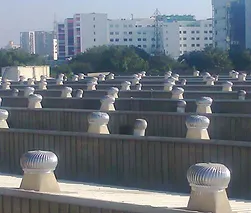
Where It Is Used
AGRICULTURAL & STORAGE BUILDINGS
- Warehouses: Low-cost background ventilation for stored goods facilities.
- Agricultural Sheds: Cattle, poultry, and grain storage building ventilation.
- Grain Silos: Passive moisture and heat venting for stored grain.
- Farm Outbuildings: Zero-power ventilation for equipment and storage sheds.
LIGHT INDUSTRIAL & COMMERCIAL
- Light Industrial Sheds: Supplementary natural ventilation alongside wall openings.
- Construction Site Sheds: Temporary building ventilation without power connection.
- Rural Buildings: Ventilation where electrical supply is limited or unavailable.
- Garages & Workshops: Simple passive extraction for small enclosed spaces.
You May Also Need
Turbo Ventilator
Rotating-vane wind and motor-assisted ventilator for higher airflow.
View Details →
Wind Turbo Roof Ventilator
Wind-driven turbine ventilator for zero-energy natural building ventilation.
View Details →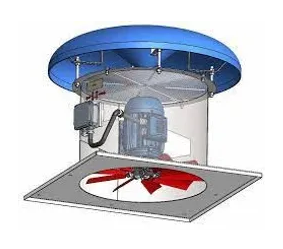
Motorized Roof Ventilator
Electric motor driven for reliable defined airflow in factories.
View Details →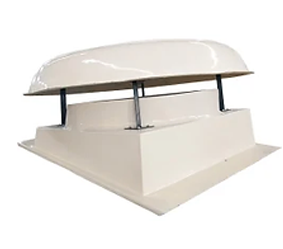
FAQs — Wind Ventilator
A wind ventilator has a fixed cowl with no moving parts — it relies purely on the pressure difference created as wind passes over the roof opening. A turbo ventilator has rotating aerodynamic vanes driven by the wind, which increases extraction efficiency compared to a static cowl. Turbo ventilators generally provide higher airflow for the same opening size, but wind ventilators have no bearings or moving parts to maintain, making them simpler and more durable over the long term.
A wind ventilator provides minimal airflow in completely calm conditions, since it relies entirely on wind pressure differential across the roof opening. Some passive stack effect (warm air rising and escaping) still occurs even without wind, but it is limited. For locations without consistent ambient wind, Vayuvents recommends a turbo ventilator or motorised roof ventilator for more reliable performance.
Sizing depends on building volume, roof area, and the number of units to be installed — as a general guide, one 450 mm to 600 mm wind ventilator per 150 to 250 sq m of roof area is a reasonable starting point for typical warehouse and shed construction. Vayuvents provides free sizing guidance based on your specific building dimensions and ventilation goals.
Yes. It is common practice to install wind ventilators across most of a roof area for low-cost background ventilation, while adding a smaller number of turbo or motorised units at points requiring guaranteed higher airflow, such as above heat-generating machinery. Vayuvents can advise on the best mix for your building layout and heat load.
Because there are no moving parts, maintenance is minimal — an annual visual inspection to check the cowl, guard mesh, and mounting bolts for corrosion or damage is generally sufficient. There is no lubrication, bearing replacement, or motor servicing required.
Standard GI construction is suitable for general industrial and agricultural use. For coastal or mildly corrosive environments, Vayuvents recommends the aluminium construction option, which offers better corrosion resistance than plain GI sheet. For more aggressive chemical environments, please contact us to discuss suitable material options.
Contact Vayuvents at enquiry@vayuvents.com or call +91 90961 88703. Share your building dimensions, roof type, and typical ambient wind conditions at your location. We will recommend the correct size, quantity, and layout, and provide a commercial proposal within 24 hours.