Cyclone Dust Collector for Biomass & Boiler — Manufacturer & Supplier
Vayuvents Pvt. Ltd. manufactures and supplies industrial cyclone dust collectors for biomass & boiler dust separation applications across India and export markets.
Biomass-fired boilers burning rice husk, bagasse, wood chips, and agro-residues generate flue gas with high particulate loading that must be cleaned before stack discharge to comply with CPCB emission standards.
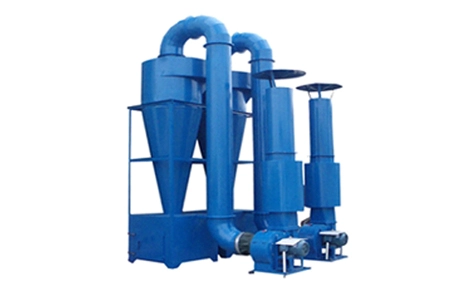
Cyclone dust collectors in the flue gas path between boiler and stack serve as the primary ash separation stage — removing bulk flyash before the downstream multi-cyclone, wet scrubber, or bag filter achieves final emission compliance.
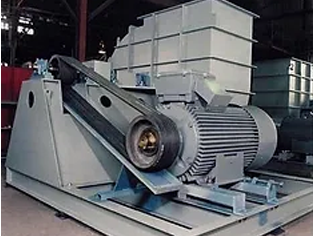
Vayuvents manufactures high-temperature cyclone dust collectors for biomass boiler flue gas service in heavy-gauge MS, with refractory lining options for very high temperature applications and ash rotary valve discharge for continuous operation.
How It Works in This Application
Biomass Combustion and Ash Generation
Biomass combustion generates flyash carried in the flue gas — rice husk and bagasse producing significantly higher flyash loadings than wood chips.
High-Temperature Flue Gas Entry
Biomass boiler flue gas exits at 200 to 400°C and enters the cyclone at this elevated temperature — requiring appropriate construction materials and sealing.
Flyash Separation
The cyclone centrifuges flyash particles from the hot flue gas stream, collecting them in the hopper below for discharge as bottom ash.
Emission Control at Stack
After the cyclone and downstream bag filter or scrubber, the cleaned flue gas meets CPCB standards — typically 50 to 150 mg/m3 for biomass boiler stacks.
Recommended Variants
High-Temperature MS Cyclone
6 to 10mm MS for biomass boiler flue gas up to 350°C — most common configuration.
Most RecommendedRefractory-Lined Cyclone
Castable refractory lined for higher temperature biomass applications above 350°C.
Multi-Cyclone Battery
Higher-efficiency multi-cyclone for biomass boilers where single cyclone alone cannot achieve emission compliance.
Rotary Valve Discharge
Motor-driven rotary airlock for continuous ash discharge during boiler operation.
Technical Specifications
| Parameter | Specification |
|---|---|
| Inlet Velocity | 12 to 20 m/s for efficient cyclone separation |
| Collection Efficiency | 70 to 95% for particles above 10 microns |
| Body Diameter | 200 mm to 2,500 mm |
| Airflow Capacity | 500 to 1,00,000 m3/hr |
| Body Material | MS / SS304 / FRP / PP |
| Temperature Range | Up to 350°C for MS construction |
| Standards | IS 6394, IS 4894 (fan), PCB norms |
Key Features
- No moving parts inside the cyclone body — zero maintenance consumables unlike bag filters
- Handles high-temperature dust streams up to 350°C where fabric bag filters cannot be used
- Handles abrasive, sticky, or hygroscopic dust where bag filters would blind quickly
- Compact vertical installation footprint suits tight industrial plant layouts
- MS, SS304, FRP, and PP construction options to match dust chemical properties
- Multi-cyclone battery arrangement for higher flow rates with better separation efficiency
- Dust discharge through rotary valve or manual dump valve into hopper or bag
- Works pressure drop test certificate with measured inlet/outlet static pressure data
Industries That Use This Application
Rice Husk Boilers
Flyash separation from rice husk-fired steam boilers in rice mills and process industries
Bagasse Boilers
Bagasse flyash cyclone pre-separator in sugar mill boilers before multi-cyclone or ESP
Wood Chip Boilers
Flyash separation from wood chip and sawdust-fired boilers in pulp, paper, and wood products industries
Agro-Residue Boilers
Mustard stalk, wheat straw, and cotton stalk boiler flyash cyclone separator for agro-residue co-firing
Thermic Fluid Heaters
Flyash separation from thermic fluid heater flue gas in plywood, textile, and process industry heating
Briquette-Fired Boilers
Biomass briquette flyash cyclone in rice, dal, and food processing plant steam generation
Tea & Tobacco Processing
Tea and tobacco drying furnace and biomass boiler flyash collection in plantation processing
Biomass Power Plants
Pre-separator cyclone for biomass power generation boilers before multi-cyclone and ESP
✓ Supply & Support: Vayuvents manufactures high-temperature biomass boiler cyclone collectors at our Vasai, Mumbai works. Refractory lining and rotary valve ash discharge available as standard options. We provide CPCB compliance documentation.
FAQs
Plain MS cyclones handle biomass boiler flue gas up to approximately 350°C. Above this, refractory-lined cyclone construction is required. Most biomass boilers with economisers have flue gas below 300°C at the cyclone inlet — within MS limits.
No. A single cyclone reduces outlet concentration to 1,000 to 5,000 mg/m3 from typical biomass boiler inlet loadings — well above the CPCB standard of 50 to 150 mg/m3. A downstream multi-cyclone, wet scrubber, or bag filter is required for full emission compliance.
A motor-driven rotary airlock valve at the cone bottom provides continuous ash discharge while preventing boiler draft air from bypassing up through the ash hopper — which would drastically reduce cyclone efficiency.
Rice husk ash is a valuable pozzolanic material used in cement and concrete. Bagasse ash contains potash and is used as agricultural fertiliser. Vayuvents can advise on ash quality based on your fuel type.
Yes. Vayuvents supplies to rice mills, sugar mills, oil expeller plants, and agro-processing facilities across rural India. Simple, maintenance-free designs suitable for operation by general workers.
6 to 8mm MS plate for the body and 8 to 10mm for the cone is adequate for rice husk boilers with inlet gas below 300°C. The rotary valve must also be rated for the flyash temperature.
Contact Vayuvents at enquiry@vayuvents.com or call +91 90961 88703. Share boiler capacity in TPH, fuel type, flue gas temperature, flow rate, and CPCB emission requirement.