Cyclone Dust Collector for Plastic & Rubber — Manufacturer & Supplier
Vayuvents Pvt. Ltd. manufactures and supplies industrial cyclone dust collectors for plastic & rubber dust separation applications across India and export markets.
Plastic and rubber processing generates fine dust from granule conveying, compounding, mixing, and extrusion — creating housekeeping challenges, product contamination risk, and occupational health hazards, especially from carbon black.
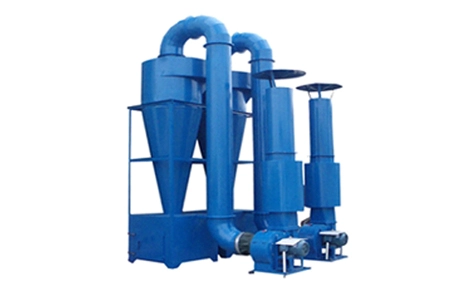
Cyclone dust collectors provide the first stage of dust collection in plastic and rubber facilities — separating coarser granule fines and compound particles before the downstream bag filter captures the fine fraction.
Vayuvents supplies cyclone collectors in MS and SS304 construction — with material compatibility checked against specific dust chemical properties including carbon black, carbon fibre, and reactive rubber compound dusts.
How It Works in This Application
Dust Generation in Processing
Granule conveying, mixing, and extrusion generate fine polymer dust and granule fines that must be collected to prevent product contamination and housekeeping issues.
Cyclone Primary Separation
The cyclone removes the coarser fraction — granule fines, compound agglomerates, and carbon black aggregates — from the collection airstream by centrifugal force.
Fine Dust to Bag Filter
Very fine polymer dust and sub-10 micron carbon black passes through the cyclone to the downstream bag filter for final collection.
Recovered Material Reuse
Coarse polymer granule fines collected in the hopper are often reusable in the process — mixed back at controlled levels to reduce material waste.
Recommended Variants
MS Cyclone for Granule Fines
MS construction for polyolefin, PVC, and engineering polymer granule fines and compound dust.
Most RecommendedSS304 Cyclone
Stainless steel for food-grade plastic, pharmaceutical packaging, and hygiene-sensitive applications.
Carbon Black Cyclone
Specially sealed cyclone for carbon black dust — fully sealed joints and rotary valve essential.
Multi-Cyclone Battery
Higher efficiency multi-cyclone for fine rubber compound dust where single cyclone is insufficient.
Technical Specifications
| Parameter | Specification |
|---|---|
| Inlet Velocity | 12 to 20 m/s for efficient cyclone separation |
| Collection Efficiency | 70 to 95% for particles above 10 microns |
| Body Diameter | 200 mm to 2,500 mm |
| Airflow Capacity | 500 to 1,00,000 m3/hr |
| Body Material | MS / SS304 / FRP / PP |
| Temperature Range | Up to 350°C for MS construction |
| Standards | IS 6394, IS 4894 (fan), PCB norms |
Key Features
- No moving parts inside the cyclone body — zero maintenance consumables unlike bag filters
- Handles high-temperature dust streams up to 350°C where fabric bag filters cannot be used
- Handles abrasive, sticky, or hygroscopic dust where bag filters would blind quickly
- Compact vertical installation footprint suits tight industrial plant layouts
- MS, SS304, FRP, and PP construction options to match dust chemical properties
- Multi-cyclone battery arrangement for higher flow rates with better separation efficiency
- Dust discharge through rotary valve or manual dump valve into hopper or bag
- Works pressure drop test certificate with measured inlet/outlet static pressure data
Industries That Use This Application
PET Recycling Plants
PET flake dust and label fines separation in PET bottle washing and flake processing lines
PVC Processing
PVC powder dust and stabiliser fines in pipe, profile, and cable compound manufacturing
Wire & Cable Industry
Carbon black and polymer compound dust in wire and cable compound mixing operations
Automotive Rubber
Carbon black and rubber compound dust in automotive rubber component manufacturing
Footwear
Rubber dust separation in sole and heel compound mixing and moulding in footwear manufacturing
Masterbatch Manufacturing
Pigment and filler dust in colour masterbatch and additive masterbatch compounding plants
Pipe & Profile Manufacturing
PVC dust and regrind fines in large diameter pipe and window profile extrusion
Technical Rubber
Specialty rubber compound dust in gasket, O-ring, and sealing component manufacturing
✓ Supply & Support: Vayuvents manufactures plastic and rubber industry cyclone collectors at our Vasai, Mumbai works. We check material compatibility with specific plastic and rubber dust types before recommending construction.
FAQs
Yes. Coarse polymer granule fines are the same material as the main product and can be mixed back at 2 to 5 percent without affecting product properties — reducing raw material waste.
Yes. Carbon black is extremely fine, persistent, and a possible carcinogen. Carbon black cyclone systems require fully sealed joints, gasketed access doors, and motor-driven rotary valve discharge.
For PVC powder (50 to 300 microns), a well-designed cyclone achieves 75 to 90 percent mass efficiency. The sub-50 micron fine fraction requires a downstream bag filter.
Yes. Vayuvents supplies cyclone collectors for PET flake washing and drying lines where label fragments and PET fines must be separated from the process airstream.
A single large cyclone has lower efficiency for fine particles than a multi-cyclone battery at the same total airflow. For coarse granule fines above 50 microns, a single cyclone is adequate. For finer plastic dust below 50 microns, a multi-cyclone battery achieves significantly better separation.
Sticky plastic dust can adhere to cyclone walls. Smooth internal surface finish, steep cone angles, and pneumatic rap hammers reduce build-up. SS304 surfaces have less adhesion than MS for some plastic dust types.
Contact Vayuvents at enquiry@vayuvents.com or call +91 90961 88703. Share the polymer type, dust particle size, airflow, and whether material recovery for reuse is desired.