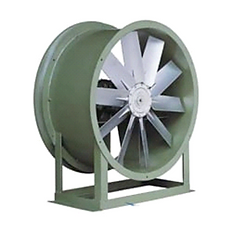
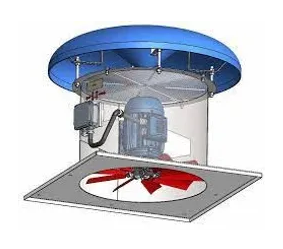
Motorised Roof Ventilator for Foundry & Forge — Manufacturer & Supplier
Vayuvents Pvt. Ltd. manufactures and supplies heavy-duty motorised roof ventilators for foundry and forge shop rooftop heat extraction — designed to withstand the extreme ambient temperatures, metal dust, and vibration environment of forging and casting operations.
Foundries and forge shops are among the hottest industrial workplaces in India. Induction furnaces, cupola furnaces, forge presses, and casting operations generate intense radiant and convective heat that accumulates at the building roof apex — reaching temperatures 25 to 40 degrees Celsius above the already extreme floor-level ambient in summer months.
Motorised roof ventilators positioned at the highest point of the foundry or forge shop roof extract this accumulated extreme-temperature air directly from the zone where it is hottest. The combination of natural thermal buoyancy and motorised impeller creates very high exhaust airflow rates with relatively low motor power — the most energy-efficient heat extraction approach for these extreme environments.
Vayuvents supplies high-temperature rated roof ventilators for foundries and forges — with motor insulation class F or H, high-temperature bearing grease, and construction materials rated for elevated ambient temperatures in the immediate vicinity of the fan installation.
How It Works in This Application
Extreme Heat Accumulation
Induction furnaces, cupola furnaces, and forge presses generate intense heat that rapidly accumulates in the highest zone of the foundry or forge shop roof, creating dangerously high temperatures.
Thermal Buoyancy Effect
Hot air being significantly less dense than cool air rises rapidly by buoyancy to the roof apex — creating a strong upward flow that the motorised roof ventilator augments with its powered impeller.
High-Volume Roof Extraction
The motorised roof ventilator draws the accumulated extreme-heat air through the fan throat at high volume, discharging it to the outdoor atmosphere well above roof level.
Floor-Level Ventilation Makeup
Replacement air enters through large wall louvres, roller shutter gaps, and dedicated supply openings at floor level, providing cooler air to the lower working zone where operators are located.
Recommended Variants
High-Temperature Roof Ventilator
Class F/H motor insulation and high-temperature bearing grease for continuous operation in high-ambient foundry environments.
Most RecommendedBelt-Drive Roof Ventilator
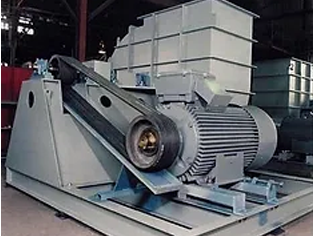
Motor mounted on a separate bracket outside the hot air path, with belt drive to the impeller — keeps motor cool in very hot foundry environments.
Large-Diameter Roof Ventilator
Very large throat (1,200 to 1,800mm) for maximum airflow extraction per roof opening — ideal for minimising number of roof penetrations.
MS Heavy-Gauge Roof Ventilator
Heavy-gauge MS construction for durability in the vibration and dust environment of foundry and forge operations.
Technical Specifications
| Parameter | Specification |
|---|---|
| Airflow Capacity | 5,000 to 1,00,000 m3/hr |
| Static Pressure | Up to 40 mmWG |
| Motor Power | 0.37 to 22 kW |
| Throat Diameter | 600 to 1,800 mm |
| Max Ambient Temperature | Up to 80 degrees Celsius (near fan) |
| Motor Insulation | Class F as standard, Class H on request |
| Standards | IS 4894, IS 6966 |
Key Features
- Class F motor insulation as standard for high-ambient temperature foundry and forge roof installations
- High-temperature bearing grease rated for continuous operation at elevated ambient temperatures
- Heavy-gauge MS body construction withstands the vibration transmitted from forge press and casting operations
- Large throat diameter options for high airflow extraction with minimal roof structural impact
- Belt-drive variant available where motor must be completely isolated from the extreme heat environment
- Birdproof mesh guard with heavy-duty frame suitable for high-vibration foundry environments
- Anti-corrosion paint resistant to the chemically active atmosphere around cupola furnaces and casting operations
- Works performance test certificate with measured airflow and power data
Industries That Use This Application
Drop Forging
High-temperature heat extraction from hammer forge and hydraulic press forge shop rooftops
Sand Casting Foundry
Intense heat and combustion gas extraction from iron and steel cupola foundry roofs
Die Casting
Heat extraction from aluminium and zinc die casting plants with multiple die casting machines
Investment Casting
Shell and mould burn-off heat extraction in investment casting plants
Automotive Forgings
Forge shop heat extraction in automotive component forging plants (crankshafts, con rods, wheel hubs)
Engineering Forgings
Heat extraction from steel flanges, valves, and engineering component forge shops
Non-Ferrous Casting
Heat from copper, brass, and aluminium casting operations in non-ferrous foundries
Heavy Engineering
Heat extraction from large structural casting and heavy forging operations
✓ Supply & Support: Vayuvents manufactures high-temperature rated motorised roof ventilators for foundry and forge applications at our Vasai, Mumbai works. We have supplied to casting and forging facilities in Rajkot, Coimbatore, Pune, and Ludhiana.
FAQs
Foundry and forge operations generate the most intense heat loads of any industrial process — temperatures near furnaces and presses can exceed 500 degrees Celsius radiant temperature. This creates catastrophic heat stratification at roof level, with temperatures 25 to 40 degrees Celsius above already-extreme floor-level ambient. Without adequate roof ventilation, these conditions lead to heat stress incidents, reduced worker productivity, and equipment reliability problems.
Standard motor insulation is Class B (rated to 130 degrees Celsius total winding temperature). In foundry roof installations where ambient temperature immediately around the motor may reach 60 to 80 degrees Celsius, Class F insulation (rated to 155 degrees Celsius) is required as minimum. Vayuvents supplies Class F insulation as standard for foundry roof ventilators and Class H (180 degrees Celsius) for the most extreme applications.
Foundries require 30 to 60 air changes per hour — significantly higher than general industrial buildings — due to the extreme heat loads from furnaces and casting equipment. For a 2,000 sq m foundry with 10m ceiling height, this requires 6,00,000 to 12,00,000 m3/hr of exhaust airflow, typically provided by 10 to 20 large-diameter roof ventilators. Vayuvents provides a detailed heat load calculation for your specific foundry.
Both applications require heat extraction from very hot environments, but foundries often have higher ambient temperatures near the roof than forge shops due to the continuous operation of cupola or induction furnaces. Vayuvents specifies the appropriate motor insulation class and bearing arrangement based on the ambient temperature survey of your specific building and process.
Standard foundry operations (iron casting, steel forging) do not create flammable vapour atmospheres, so standard IP55 motors are acceptable. However, foundries casting aluminium alloys may generate hydrogen gas from reaction of molten aluminium with moisture, and magnesium casting is highly flammable — these require explosion-proof construction. Please specify your casting material when requesting a quote.
Forge presses generate significant floor and structural vibration that transmits to the roof structure and any equipment mounted on it. Vayuvents specifies anti-vibration mounts for all foundry and forge roof ventilator installations, and uses dynamically balanced impellers to minimise additional vibration. Fan structural bolts and roof curbs are specified to handle the combined static and dynamic loads in high-vibration environments.
Contact Vayuvents at enquiry@vayuvents.com or call +91 90961 88703. Share your building dimensions, furnace type and capacity, number of forges or casting machines, and ambient temperature survey data if available. We will calculate the required exhaust airflow and provide a high-temperature roof ventilator selection and commercial proposal within 24 hours.